

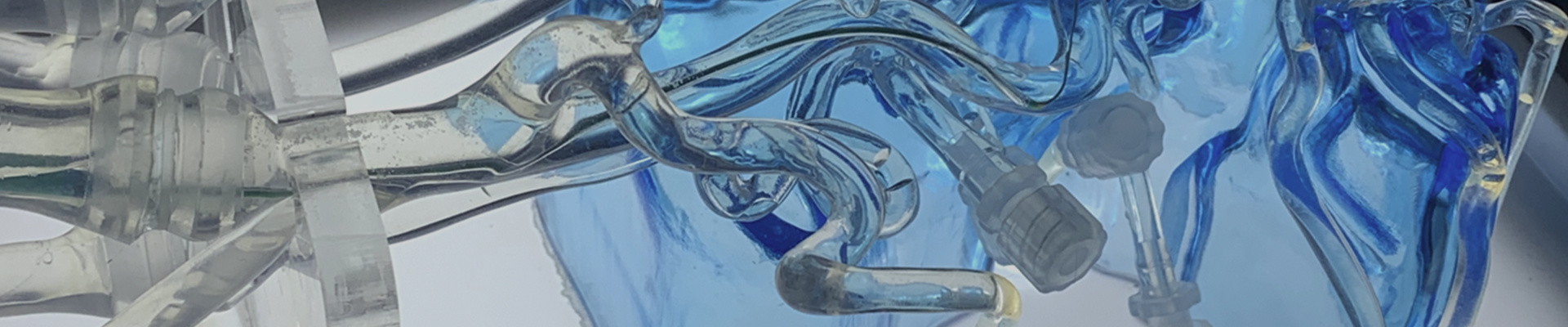

Coronary Interventional CTO Testing Model: A Precision R&D Platform for Full-Procedure Workflow Validation
Release date:
2026-03-13 16:48
Pain Point Focus: The Challenges of Procedure Coverage and Path Replication in CTO Interventional Device Validation

Model Value Presentation: A Deployed, Full-Procedure Workflow Testing Solution

Core Needs Alignment: Providing Comprehensive Support for CTO-Intervened Device R&D


- Supports precise verification of forward and reverse passage devices: Based on real clinical CTO cases, the core procedural pathways for both antegrade and retrograde recanalization are precisely replicated—covering the tortuous course of epicardial collateral vessels and the slender diameter and angulation characteristics of septal branches. It perfectly replicates the path resistance and handling feel encountered during clinical catheterization procedures, providing a highly realistic test environment for performance optimization of core devices such as antegrade and retrograde guidewires and microcatheters.
- Coverage of multi-lesion, all-procedure workflow testing: Integrate clinically common lesion types such as CTO lesions, bifurcation lesions, and stenotic balloon-expandable lesions. It fully supports end-to-end testing of the entire PCI procedure—from guidewire puncture and balloon dilation to stent implantation and post-procedural assessment—with seamless integration of real-world device operations across all steps. This eliminates the need to repeatedly rebuild simulation models, enabling multi-condition validation in a single setup and significantly boosting R&D efficiency.
- Adapts to both R&D validation and market demonstration needs: Standardized lesion scenarios and full-surgical-procedure replication, It can both provide reproducible, quantifiable validation data for device R&D, thereby helping to optimize device performance, and intuitively showcase the operational outcomes of the device across different pathological conditions, clearly demonstrating the core steps of the entire PCI procedure and enhancing the persuasiveness of demonstrations in marketing and sales.
Keywords:
3D printing,Minimally Invasive Intervention,Medical devices,Vascular model,Silicone vascular model,Medical simulation,Medical Device R&D and Testing,Chief Technology Officer,Coronary intervention,CTO lesion,Chronic Total Occlusion,Bidirectional access device,PCI
Other news
Request a quote
*Please keep your phone accessible—we'll reach out to you within 24 hours.
PARTNERSHIP
Partnership

Contact us
Address: Wangzuo Qujiang, 3269 Yanxiang Road, Yanta District, Xi'an City
Pre-sales Consultation
Request a quote


