


NAM Policy Accelerates Implementation, with 3D-Printed Simulation Models Empowering Innovation in Medical Device R&D and Testing
Release date:
2026-03-20 18:10

As the global medical device industry advances toward greater precision and innovation, the limitations of traditional animal testing in terms of R&D efficiency, ethical compliance, and clinical relevance have become increasingly apparent. In recent years, policies promoting the replacement of animal testing with New Approach Methodologies (NAMs) have accelerated, with major regulatory authorities in China, the United States, and Europe introducing a series of measures to advance the application of alternative technologies such as organoids, organ-on-a-chip systems, and computational modeling, thereby bringing about transformative changes to medical device R&D and testing. Among these, 3D-printed simulation models, with their high fidelity, customizability, and reusability, have emerged as a critical bridge between technology and clinical practice, playing a central role in device testing and R&D validation. DeWei Medical, which specializes in intelligent medical simulation technologies, is leveraging its core technologies to drive the industrialization and practical application of this field.
Top-level policy design has paved the way for the application of 3D-printed simulation models. In April 2025, the Ministry of Industry and Information Technology and six other departments issued the “Implementation Plan for the Digital and Intelligent Transformation of the Pharmaceutical Industry (2025–2030),” which identifies “data mining of animal model data and virtual animal experiments” as a key application scenario, thereby promoting the deep integration of medical simulation with device R&D. Meanwhile, the U.S. FDA, the European Medicines Agency (EMA), and China’s National Medical Products Administration (NMPA) have reached a consensus to encourage technological approaches that replace traditional animal testing; organoid data can now be directly used in new drug applications. 3D-printed simulation models, as a critical component of in vitro alternative testing, are increasingly recognized for their test data, providing enterprises with more efficient and compliant solutions.
Testing and validation are core components of medical device R&D; however, traditional animal studies suffer from long timelines, high costs, species bias, and ethical constraints. 3D-printed simulation models can effectively complement or even replace certain animal-testing scenarios, particularly in the fields of minimally invasive interventions and vascular devices, where their advantages are especially pronounced. These models align perfectly with the 3R principles—Replacement, Reduction, and Refinement—advocated by the NAM policy and are in line with the growing trend toward in vitro alternative testing.
The core advantage of 3D-printed simulation models lies in their ability to accurately replicate the human physiological environment and anatomical structures, thereby enabling precise simulation and testing of device performance. By leveraging patient-specific CT and MRI imaging data, these models can faithfully reproduce organs and vascular structures at a 1:1 scale. Through material optimization, they can mimic the mechanical properties of human tissues and hemodynamic characteristics, allowing devices to be tested in scenarios that closely resemble the real human body. This significantly enhances the clinical relevance of the data, minimizes discrepancies between animal studies and human applications, reduces R&D risks, and shortens development timelines.
DeWei Medical, an innovative company specializing in intelligent medical simulation technology, provides medical device engineers with professional simulation-model testing solutions. Its core team comprises experts from renowned domestic and international universities and research institutes, possessing cutting-edge expertise in 3D printing, hemodynamics, and medical simulation. The company has built a deep foundation in fundamental areas such as 3D modeling and biomimetic fabrication of biological tissues, enabling it to precisely meet the R&D and testing needs of its clients.


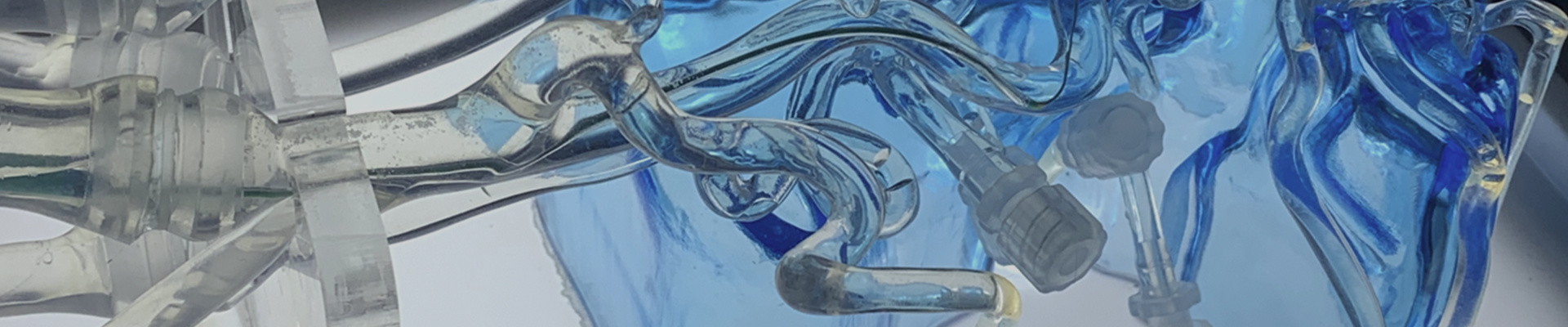
DeWei Medical Simulation Models—One-Piece Molding of Complex Vasculature, Precisely Simulating Human Vascular Anatomy and Functional Characteristics
In response to the growing demand for precision in device testing, DeWei Medical’s 3D-printed simulation models are highly practical. These models faithfully replicate human anatomy on a one-to-one scale; the vascular models are crafted from a proprietary, highly transparent, soft silicone material that accurately reproduces vascular physiological characteristics and hemodynamic conditions. When paired with a comprehensive suite of testing equipment—including sensors and flow monitors—these models enable all-round monitoring of device operating status and performance parameters, providing precise and reliable data to support device optimization.


DeWei Medical Products Receive Positive Market Feedback
For medical device companies, DeWei Medical’s solutions not only align with NAM policy requirements for alternatives to animal testing but also address key pain points in R&D. 3D-printed simulation models are reusable and highly customizable, enabling rapid development of tailored test models that significantly shorten timelines and reduce costs. Moreover, the precise data they generate can support device registration submissions, accelerating product market entry.
Looking ahead, the NAM policy will continue to drive the advancement of in vitro alternative testing technologies. 3D-printed simulation models are expected to see even broader application, and when integrated with AI and digital twin technologies, they will enable intelligent, dynamic simulations. Drawing on its technological strengths, Dewei Medical will consistently deliver high-quality, professional solutions to support the high-quality development of the medical device industry, thereby helping China’s medical device sector achieve self-reliance and controllability while expanding onto the global stage.
Keywords:
3D printing,Medical devices,Silicone vascular model,Neurointerventional Vascular Model,Minimally Invasive Intervention,Medical simulation,Food and Drug Administration
Other news
Request a quote
*Please keep your phone accessible—we'll reach out to you within 24 hours.
PARTNERSHIP
Partnership

Contact us
Address: Wangzuo Qujiang, 3269 Yanxiang Road, Yanta District, Xi'an City
Pre-sales Consultation
Request a quote


