


[Product Collection] 03 Simulation Model – Electrophysiological Heart Model | Electrophysiology Experiment Simulation Platform
Release date:
2025-09-05 09:52
Electrophysiological heart models are closely linked to various cardiac arrhythmia disorders. Atrial fibrillation is a common condition in which patients experience disorganized electrical signals in the atria, increasing the risk of serious complications such as blood clots and heart failure. Clinically, catheter ablation is often employed as a treatment, using tools like mapping catheters and radiofrequency ablation catheters to precisely locate and eliminate abnormal electrical pathways. Ventricular tachycardia, meanwhile, is equally challenging; during an episode, the ventricles beat excessively fast, potentially leading to sudden cardiac arrest, necessitating procedures that combine mapping and ablation to restore normal heart rhythm. Additionally, atrioventricular block—a condition where electrical signals between the atria and ventricles are disrupted—can severely impair cardiac function, often requiring implantation of a pacemaker for effective management.
One . Preface
Electrophysiological heart models are closely linked to various cardiac arrhythmia disorders. Atrial fibrillation is a common condition in which patients experience disorganized electrical signals in the atria, increasing the risk of serious complications such as blood clots and heart failure. Clinically, catheter ablation is often used as a treatment option, employing tools like mapping catheters and radiofrequency ablation catheters to precisely identify and eliminate abnormal electrical pathways. Ventricular tachycardia, meanwhile, is equally challenging; during an episode, the ventricles beat excessively fast, potentially leading to sudden cardiac arrest, making it essential to restore normal heart rhythm through a procedure that combines mapping and ablation techniques. Additionally, atrioventricular block—a condition where electrical signals between the atria and ventricles are disrupted—can severely impair cardiac function, often requiring implantation of a pacemaker for effective management.
However, the effectiveness of surgical instruments in complex cases remains difficult to verify. For instance, patients with atrial fibrillation often exhibit significant variations in both cardiac anatomy and electrophysiological characteristics, making it challenging for certain devices to precisely conform to the intricate structures of the pulmonary vein ostia. Moreover, the procedures themselves are exceptionally demanding—take, for example, ablation of ventricular tachycardia lesions, where accurately pinpointing the target within the ventricular myocardium is critical. Even a slight deviation could inadvertently damage healthy heart tissue, potentially leading to serious complications such as cardiac perforation. To overcome these challenges, electrophysiological heart models have emerged as a crucial solution.

Two . Structure
Brachiocephalic artery, bilateral subclavian arteries, left common carotid artery, aortic arch, descending aorta, abdominal aorta, renal arteries, iliac arteries, femoral arteries, brachiocephalic veins, superior vena cava, inferior vena cava, iliac veins, femoral arteries, left atrium, right atrium, left ventricle, right ventricle, pulmonary artery branches, main pulmonary vein
Xi'an Derwei Medical's electrophysiology heart model uses a self-developed, highly realistic silicone material, combined with 3D Printing technology enables highly accurate reproduction of the heart's anatomical structure and electrophysiological characteristics. The model fully replicates the atrial and ventricular structures, including critical areas such as the pulmonary veins, coronary sinus, and His bundle. Moreover, the model precisely mimics the morphology and positioning of blood vessels and myocardial tissues, closely matching their arrangement in the real human heart—and even delicately simulates the opening and closing states of cardiac valves.
Additionally, the model is equipped with interchangeable lesion modules, allowing it to replicate various pathological conditions, such as pulmonary vein isolation or myocardial fibrosis, thereby meeting the diverse simulation needs for different clinical scenarios.
The model's myocardial-layer silicone features unique electrical conduction properties, enabling precise simulation of the propagation of cardiac electrical activity. It allows users to adjust parameters such as signal frequency and intensity, replicating both normal and abnormal heart rhythms. Additionally, the model can be seamlessly integrated with 3D mapping systems, electrophysiological recorders, and other advanced equipment, blending virtual and physical operations to deliver a highly realistic surgical environment for users. Furthermore, the model’s surface is equipped with standardized interfaces, making it easy to connect various interventional devices and accurately mimic real-world surgical procedures.

Three . Functions and Applications
Function:
The electrophysiological heart model plays a critical role in the medical field. In medical education and skills training, it can simulate the electrical activity patterns of various arrhythmias, enabling medical students and novice doctors to repeatedly practice procedures such as mapping catheter manipulation and ablation target localization. This helps them become familiar with the electrophysiological anatomy of the heart, quickly build hands-on experience, and address the common challenge of insufficient practical opportunities in traditional teaching methods.
In clinical practice, this model serves as a powerful tool for preoperative planning. Physicians can use the patient’s electrophysiological data to simulate the surgical procedure on the model, enabling them to anticipate potential risks—such as cardiac perforation or difficulties in catheter placement—that may arise during complex arrhythmia surgeries. This allows doctors to proactively develop tailored strategies, optimize ablation pathways, and ultimately enhance the overall success rate of the procedure.
In the field of scientific research and innovation, electrophysiological heart models can accurately replicate cardiac electrical activity under various pathological conditions, helping researchers investigate the mechanisms underlying arrhythmias, test the performance of novel electrophysiological devices, evaluate the efficacy of emerging therapeutic approaches, and provide an experimental foundation for driving technological advancements in electrophysiological cardiac procedures.

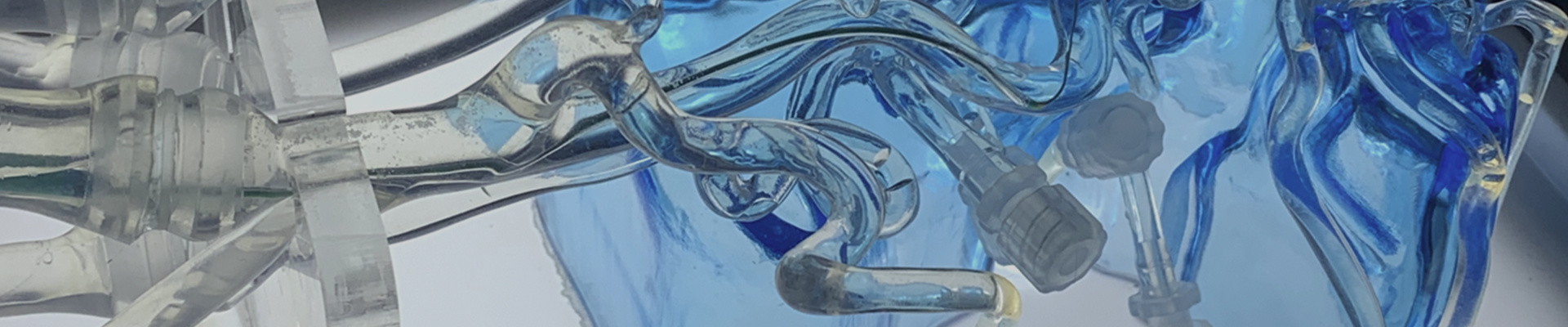
Physical image of a water-tank-based cardiac electrophysiology model - Xi'an Derwei Medical
Applications:
The model supports simulations of various electrophysiological procedures, such as atrial fibrillation radiofrequency ablation, ventricular tachycardia cryoablation, AV node modification, and cardiac pacemaker implantation. By enabling repeated simulation practice, it helps reduce risks in real surgical settings, providing robust support for the precise treatment of cardiac electrophysiological diseases while simultaneously advancing and popularizing electrophysiology-based therapeutic techniques.

Acrylic Enclosure-Type Cardiac Electrophysiology Model - Xi'an Derwei Medical
Keywords:
Other news
Request a quote
*Please keep your phone accessible—we'll reach out to you within 24 hours.
PARTNERSHIP
Partnership

Contact us
Address: Wangzuo Qujiang, 3269 Yanxiang Road, Yanta District, Xi'an City
Pre-sales Consultation
Request a quote


