

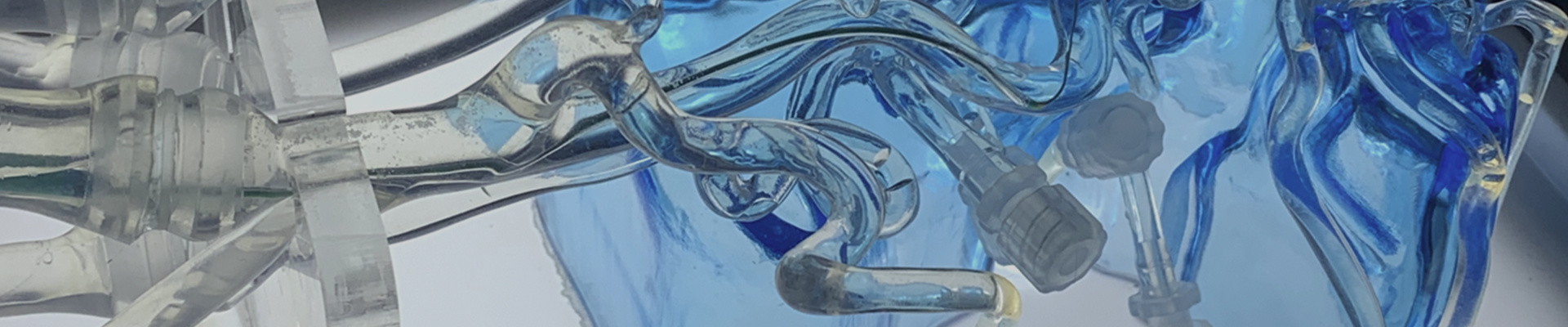

[Product Collection] 03 Simulation Model – Neurointerventional Vascular Model | Mimic Blood Vessels, Delivering Precision-Driven Insights
Release date:
2025-09-18 11:46
In the treatment of cerebrovascular diseases, conditions such as intracranial aneurysms, cerebral arteriovenous malformations (AVMs), acute ischemic stroke, and carotid artery stenosis often rely on neurointerventional procedures. Intracranial aneurysms are treated with coil embolization or stent-assisted embolization to prevent rupture and bleeding, while cerebral AVMs are managed by using embolic materials to block abnormal blood flow. Acute ischemic stroke requires the use of thrombectomy stents or aspiration catheters to reopen blocked vessels. And in cases of carotid artery stenosis, balloon angioplasty combined with stent placement is employed to restore proper blood flow.
I. Medical History
In the treatment of cerebrovascular diseases, conditions such as intracranial aneurysms, cerebral arteriovenous malformations (AVMs), acute ischemic stroke, and carotid artery stenosis often rely on neurointerventional procedures. Intracranial aneurysms are treated with coil embolization or stent-assisted embolization to prevent rupture and bleeding, while cerebral AVMs are managed by using embolic materials to block abnormal blood flow. Acute ischemic stroke requires the use of thrombectomy stents or aspiration catheters to reopen blocked vessels. Carotid artery stenosis, meanwhile, is addressed through balloon angioplasty combined with stent placement to restore proper blood flow.
The procedure heavily relies on sophisticated devices such as microcatheters, microguidewires, thrombectomy devices, and embolic coils. However, the adaptability, deliverability, and safety of these instruments in the complex cerebral vascular environment are difficult to fully validate preclinically. Moreover, given the thin walls and tortuous pathways of cerebral blood vessels, even a slight misstep during manipulation could lead to vessel rupture, branch vessel injury, or thrombus detachment—potentially triggering severe neurological deficits. As a result, the risk associated with surgical procedures remains exceptionally high. The development of neurointerventional vascular models has now provided a critical breakthrough, helping to overcome these challenging limitations.
2. Industry Overview
Technological advancements have led to the maturation of neurointervention—a cutting-edge treatment that uses vascular interventions to address neurovascular diseases, offering significant advantages over intravenous thrombolysis and traditional open surgery. As the technology continues to evolve and clinical data become more robust, several domestic medical guidelines have been updated, paving the way for its gradual adoption in treating ischemic stroke, intracranial arterial stenosis, and most types of intracranial aneurysms.
Surgical volume is rapidly growing: China's neurointerventional procedures are poised for significant expansion, increasing from 161,000 cases in 2020 to an estimated 741,000 by 2026, representing a CAGR of 28.9%. Moreover, the evolution of surgical techniques varies depending on the specific type of disease.
Hemorrhagic conditions: Interventional therapy has become the clinical first-line treatment for intracranial aneurysms, with high recommendation levels in guidelines and steadily increasing adoption rates. Domestically, the number of interventional procedures for intracranial aneurysms is expected to grow significantly—from 60,000 cases in 2019 to 444,000 cases by 2030, representing a CAGR of 19.9%. The primary treatment devices include coil embolization materials and flow-diverting stents; among these, coils remain the preferred choice, with their domestic production rate continuing to rise. In the future, flow-diverting stents are anticipated to gain a larger share of the market.
Acute ischemic conditions: Since 2015, mechanical thrombectomy has received the highest-level recommendation in both domestic and international guidelines, propelling the industry into a rapid growth trajectory. Domestically, the volume of acute ischemic interventional procedures is expected to surge from 48,000 cases in 2020 to 346,000 by 2026, representing a robust compound annual growth rate (CAGR) of 39.2%. Thrombectomy techniques include stent-retriever thrombectomy, aspiration thrombectomy, and the combined approach of stenting plus aspiration—where the latter method has demonstrated superior efficacy. Looking ahead, treatment strategies are likely to evolve toward an integrated approach that combines stenting with aspiration.
Narrowing conditions: Currently, drug therapy remains the first-line clinical approach for atherosclerotic stenosis, but it suffers from a high recurrence rate, making the development of superior endovascular treatment options urgently needed. Domestically, driven by robust underlying demand, local companies are actively expanding their product pipelines. As these products undergo continuous innovation and accumulate extensive clinical data, the guideline recommendations for interventional treatments targeting narrowing conditions are poised to evolve, paving the way for the launch of new products and boosting industry penetration rates.
The market is expanding: China's neurointerventional medical device market is growing rapidly, projected to reach 43.22 billion yuan by 2028, with a compound annual growth rate of 36.5%.
Domestic substitution is accelerating: Although neurointerventional medical devices were long dominated by overseas manufacturers—such as Medtronic and Stryker, which once controlled nearly 90% of the high-value product market, including stents—domestic Chinese companies have steadily achieved breakthroughs in recent years. In some niche product segments, their performance and efficacy now rival or even surpass those of imported counterparts. Meanwhile, with the ongoing implementation of centralized procurement policies, the trend toward domestic substitution has become increasingly evident.

3. Structure and Function
Functional Structure
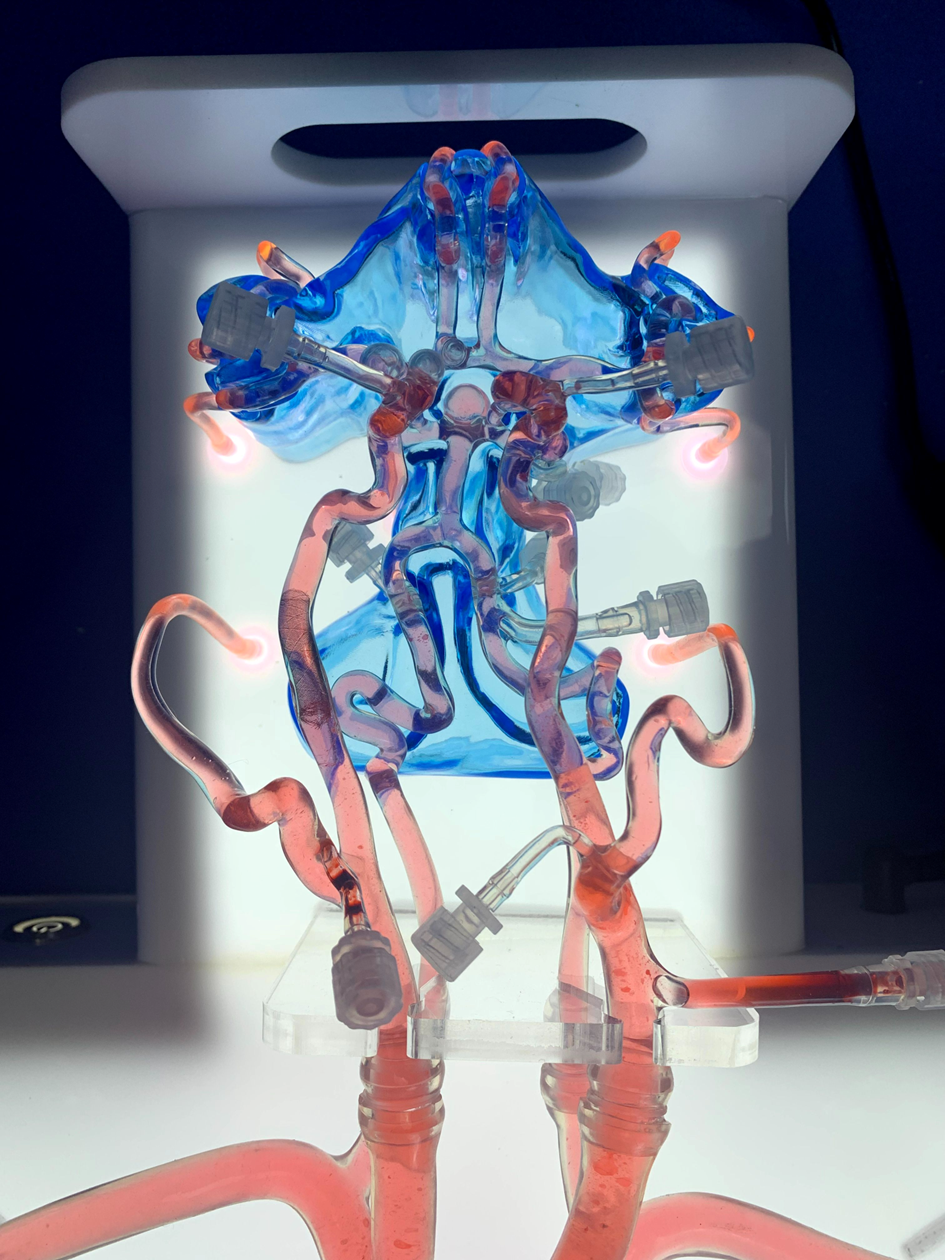
Precisely simulating vascular structures: This technology accurately replicates the anatomical features of human neurovascular systems, including the diameter, curvature, and branching patterns of various vessels. It provides a highly realistic vascular environment for interventional procedures, enabling doctors to familiarize themselves with vascular anatomy and strategically plan surgical approaches in advance.
Hemodynamic Simulation: This system can model the flow of blood within blood vessels, including parameters like blood velocity and pressure distribution. By adjusting relevant parameters, it accurately simulates hemodynamic changes under various physiological or pathological conditions, enabling doctors to understand how blood flow affects diseased areas—and how interventional procedures alter hemodynamics.
Supports a variety of interventional procedure training: It provides a versatile practice platform for neurointerventional techniques such as vascular puncture, catheter insertion, and stent placement. The model is reusable, enabling physicians to perform extensive drills, refine their procedural skills, enhance surgical proficiency and precision, and ultimately minimize errors and risks during real-world procedures.

4. Applications
Medical education and training help medical students understand the neurovascular system: By presenting the complex structures and spatial relationships of nerves and blood vessels in an intuitive way, this approach enables students to develop clear anatomical concepts, laying a solid foundation for their future learning and clinical practice.
Training in neurointerventional surgical skills: Provides residents, fellows, and other healthcare professionals with a safe, repeatable practice environment, enabling them to gradually master the procedures and techniques of neurointerventional surgery through simulated operations, gain valuable experience, enhance their surgical proficiency, and ultimately shorten the training period.
Surgical Planning and Simulation: Developing a Personalized Surgical Plan—Doctors can simulate the surgical procedure on a model based on the patient’s specific condition, carefully selecting the optimal surgical approach, instruments, and techniques. This allows them to anticipate potential challenges and prepare contingency strategies in advance, ultimately enhancing both the success rate and safety of the operation.
Assessing surgical risks: By conducting a pre-surgical rehearsal on the model, doctors can more intuitively evaluate the procedure's complexity and potential risks, promptly identifying issues such as the degree of vascular stenosis, the exact location of lesions, and their relationship with surrounding blood vessels. This allows them to refine the surgical plan and minimize the occurrence of intraoperative complications.
Feasibility and safety assessment of medical device R&D and testing: During the development of novel neurointerventional medical devices, vascular models can be used to simulate how the devices function within human blood vessels, enabling evaluation of their design rationale, ease of operation, and compatibility with vascular structures. This approach helps identify and address potential issues early in the process, ultimately reducing both development costs and risks.
Comparing the performance of different devices: It allows for performance testing and comparison of neurointerventional devices from various manufacturers or across different types, all on the same model. This provides a valuable reference for clinicians when selecting the right device, ultimately helping to enhance the overall quality of medical devices and improve their clinical application outcomes.
Academic research into the mechanisms underlying neurovascular diseases: By simulating various pathological conditions—such as vascular stenosis or aneurysm formation—on experimental models, researchers can delve deeper into the processes driving the onset and progression of these diseases, ultimately providing a solid theoretical foundation for prevention and treatment strategies.
Exploring new treatment methods and technologies: By leveraging neurointerventional vascular models, researchers can test innovative interventional approaches and techniques—such as the application of novel embolic materials or the enhanced use of intravascular ultrasound—providing experimental support to drive technological advancements and growth in the field of neurointervention.
Keywords:
Other news
Request a quote
*Please keep your phone accessible—we'll reach out to you within 24 hours.
PARTNERSHIP
Partnership

Contact us
Address: Wangzuo Qujiang, 3269 Yanxiang Road, Yanta District, Xi'an City
Pre-sales Consultation
Request a quote


