

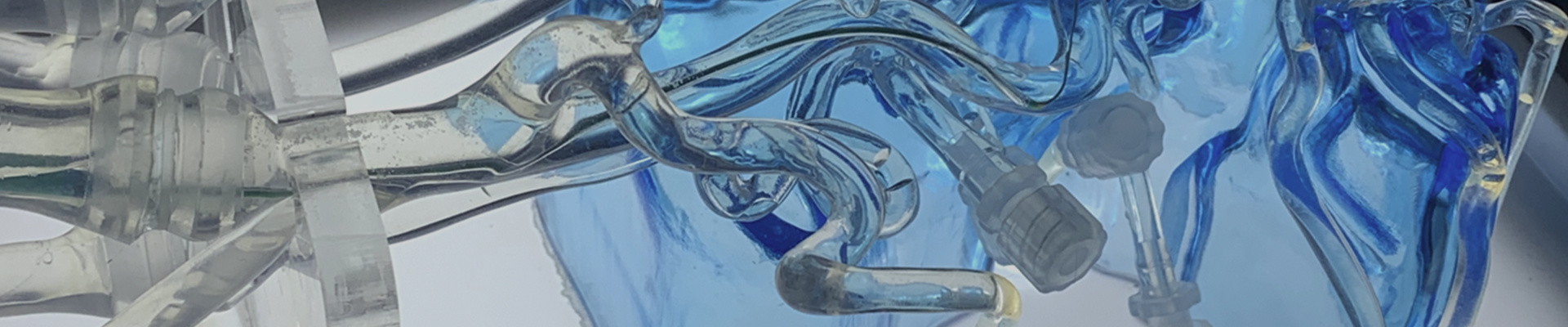

Lower Limb Artery Model: A Precision Solution Focused on Core Calcific Lesions in Clinical Practice
Release date:
2026-01-16 18:12
Lower Limb Arterial Calcification: Clinical Challenges in the Context of Diverse Lesions
The anatomical characteristics of the lower-extremity arteries themselves constitute a “natural barrier” to surgery: the S-shaped curvature of the femoral artery, the sharp angulation of the popliteal artery, and the slender lumen of the infra-popliteal arteries all severely constrain the margin for error in instrument manipulation. Moreover, calcification in the lower-extremity arteries does not present as a single morphological pattern; rather, it manifests as a complex spectrum of lesions—ranging from circumferential, diffuse calcification of the femoral artery, to eccentric, nodular calcification of the popliteal artery, and down to minute calcific plaques in the infra-popliteal arteries. These diverse lesion types impose markedly different requirements for instrument compatibility. Even within the context of curettage alone, there are specific challenges such as “uneven calcific hardness leading to fluctuating cutting efficiency” and “irregular calcific margins increasing the risk of vascular injury,” which place stringent demands on both device trackability and imaging clarity.
Meanwhile, postoperative assessment of calcific lesions also presents significant challenges: following stent implantation, conventional imaging modalities often fail to clearly visualize stent apposition and the relationship between calcification and the stent, whereas optical coherence tomography (OCT), despite its high-resolution imaging capability, lacks standardized preprocedural simulation scenarios, making it difficult for operators to anticipate how imaging outcomes will inform clinical decision-making.
Both the clinical and R&D communities lack a standardized platform that simultaneously preserves anatomical detail and accommodates a wide range of pathological conditions: conventional models either distort anatomical structures or are limited to a single type of lesion, making it difficult to support realistic device manipulation and OCT imaging assessment. This results in prolonged training periods for operators and low efficiency in device R&D and validation.

Schematic diagram of optical coherence tomography (OCT) imaging of the Pantheris catheter system
Lower Limb Arterial Calcification Simulation Model: A Complete, Ready-to-Use Solution

Precise alignment with core clinical needs


OCT imaging of calcified human tissues & OCT imaging results of the lower-limb calcification model from DeWei Medical
Meet the need for anatomical and procedural realism : 1:1 replication of the spatial anatomy, tortuosity, and precise dimensions of the human lower-extremity arterial tree; the procedural workspace is indistinguishable from that of real human vessels; full manipulation of authentic devices such as guidewires, catheters, and stents is supported; and a circulatory pump is used to simulate blood flow, faithfully reproducing the tactile feedback of clinical practice.
Scenario requirements for covering multiple types of calcific lesions The model is equipped with typical calcified lesion scenarios tailored for use with scalpel-based ablation, and also supports flexible switching between simulated calcified lesion segments, thereby accommodating testing scenarios for various surgical techniques and instruments.
Supporting the need for precise assessment in OCT imaging : Utilizing clinical-grade OCT-specific materials, the imaging performance for calcified lesions and post-stent implantation closely mirrors real-world cases, delivering unparalleled precision to support OCT image interpretation training and visual demonstrations of device implantation outcomes.
Efficiency requirements for the R&D and market promotion of adapted devices : Offers a one-stop solution that provides standardized lesion scenarios, realistic procedural simulation, and high-definition imaging, thereby accelerating the R&D and validation of new medical devices while vividly demonstrating device performance and enhancing the persuasiveness of market presentations.
Keywords:
OCT,Calcific lesion,Calcification of the planer,Lower Limb Arterial Calcification,Minimally Invasive Intervention,3D printing,Medical devices
Other news
Request a quote
*Please keep your phone accessible—we'll reach out to you within 24 hours.
PARTNERSHIP
Partnership

Contact us
Address: Wangzuo Qujiang, 3269 Yanxiang Road, Yanta District, Xi'an City
Pre-sales Consultation
Request a quote


