


TAVR heart model precisely simulates blood flow, driving innovation in surgical techniques.
Release date:
2025-06-25 08:52
The medical understanding and treatment of aortic stenosis (AS) have evolved significantly over centuries of exploration and advancement. In the early stages, little was known about its underlying pathological mechanisms—only by the 19th century, with advances in anatomy and pathology, did scientists begin to clearly link it to abnormalities in valve structure. By the mid-20th century, the advent of echocardiography allowed doctors to more accurately assess the severity of valve narrowing and evaluate cardiac function, dramatically improving diagnostic capabilities. In terms of treatment, early approaches relied primarily on medications to alleviate symptoms, though these methods offered only limited effectiveness.
Medical History
In the 1960s, with the advancement of cardiac surgical techniques, aortic valve replacement emerged as the standard treatment for severe aortic stenosis (AS). More recently, the advent of transcatheter aortic valve replacement (TAVR) has offered a minimally invasive treatment option for high-risk and elderly patients, marking the beginning of a new era in AS therapy. As research progresses, it has become clear that AS is not merely a valve-related condition—it is also closely linked to systemic diseases such as atherosclerosis and inflammation, opening up fresh avenues for future therapeutic approaches.
About Grading the Severity of Aortic Stenosis , an aortic valve area of less than 1 cm², a peak flow velocity of ≥4.0 m/s, or an average transvalvular pressure gradient across the aortic valve of ≥40 mmHg—any one of these three criteria indicates severe aortic stenosis. Ideally, all criteria within the specified range should be strictly met. If there is inconsistency among the diagnostic criteria, these standards should be integrated with other imaging findings and clinical data for a comprehensive assessment before reaching a final diagnosis.

Grading Criteria for Aortic Stenosis Severities
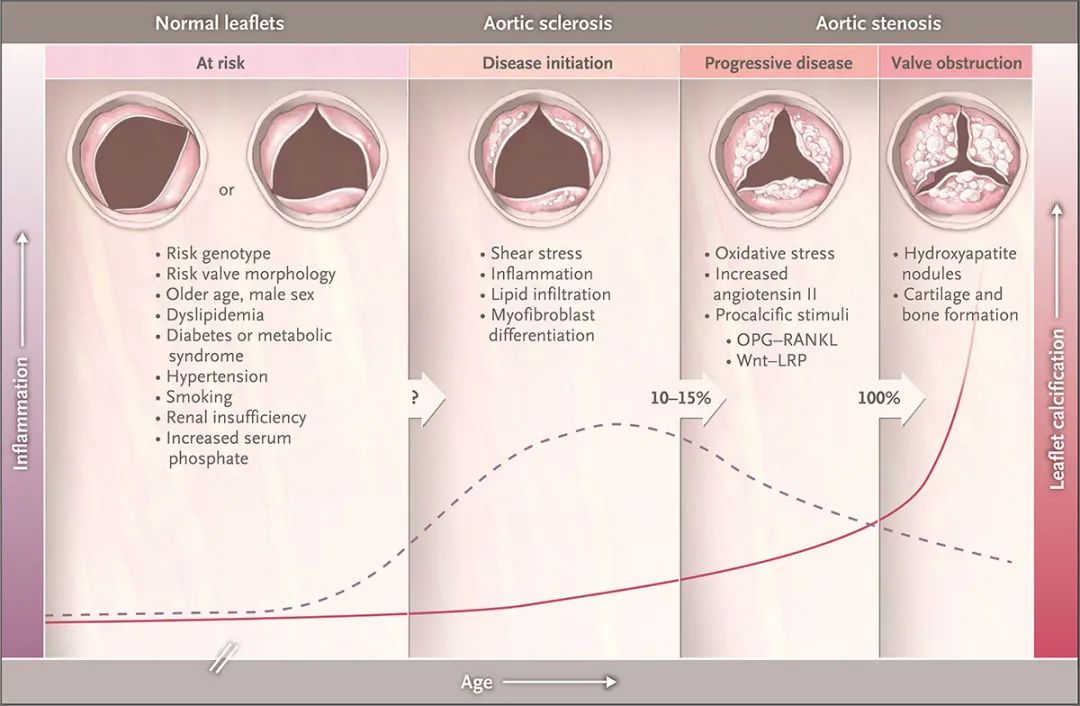
Normal aortic valve leaflets – Aortic sclerosis – Aortic stenosis
Surgical Technique Comparison
Traditionally, open-heart surgery was the only viable option—but 30% of high-risk patients were excluded due to age or poor physical condition. A breakthrough came in 2002, when French cardiologist Alain Cribier performed the first-ever TAVR procedure, delivering an artificial heart valve directly to the heart via a catheter. In 2010, the landmark PARTNER trial confirmed that for patients ineligible for open-heart surgery, TAVR reduced the one-year mortality rate from 50.7% to 30.7%. In contrast, traditional open-heart surgery requires splitting the breastbone, resulting in significant trauma, excessive bleeding, and a much slower recovery. Patients undergoing this procedure also experience intense postoperative pain and typically require longer hospital stays.
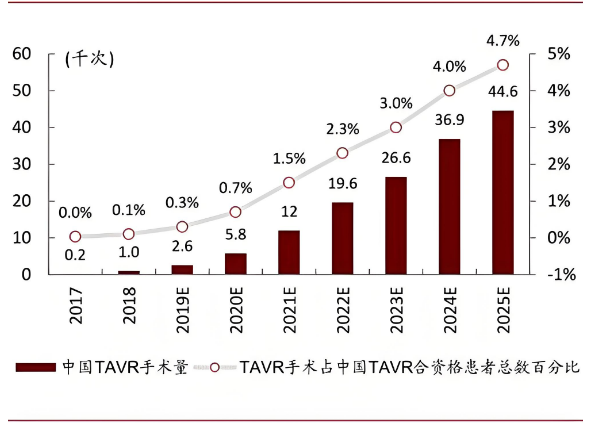
Meanwhile, TAVR surgery is a Minimally invasive The procedure involves delivering an artificial valve to the affected area via blood vessels, eliminating the need for open-chest surgery. It’s minimally invasive, resulting in less trauma and reduced bleeding, while also enabling faster recovery—patients typically can get out of bed and move around within 24 hours after the procedure, with a short hospital stay. Additionally, TAVR surgery requires relatively brief anesthesia and operation times, usually completed within 120 to 150 minutes overall. This makes it particularly suitable for elderly, frail patients or those with multiple underlying health conditions who cannot tolerate traditional open-heart surgery. TAVR surgery offers a safer and more effective treatment option. Today, more than 200,000 surgeries are performed globally each year, with China surpassing 8,000 procedures annually. Yet challenges remain: each surgery requires hundreds of meticulous, millimeter-level maneuvers under fluoroscopic guidance—mistakes in even the slightest movement can lead to life-threatening complications such as coronary artery blockages or paravalvular leaks.
TAVR Heart Model
01 Procedure Simulation
The TAVR heart model accurately and realistically simulates the entire TAVR procedure, including both the femoral artery approach and the apical approach for intervention. The model, paired with a pulsatile pump system, allows for the adjustment of multiple parameters such as blood temperature, pressure, and flow rate, simulating the real-world hemodynamic environment of the heart. Additionally, the accompanying pressure-measuring device can detect and display real-time changes in intravascular pressure curves, providing surgeons with immediate feedback during procedures. In procedural simulations, doctors can use this model to practice catheter and guidewire interventions, as well as exercises involving aortic valve stent implantation. This highly realistic, interactive surgical environment not only helps clinicians and medical professionals enhance their surgical skills and shorten the learning curve but also significantly improves patient safety during operations. Moreover, The model's aortic valve is replaceable, allowing for repeated use and the simulation of various pathological conditions, thereby meeting diverse surgical training needs.
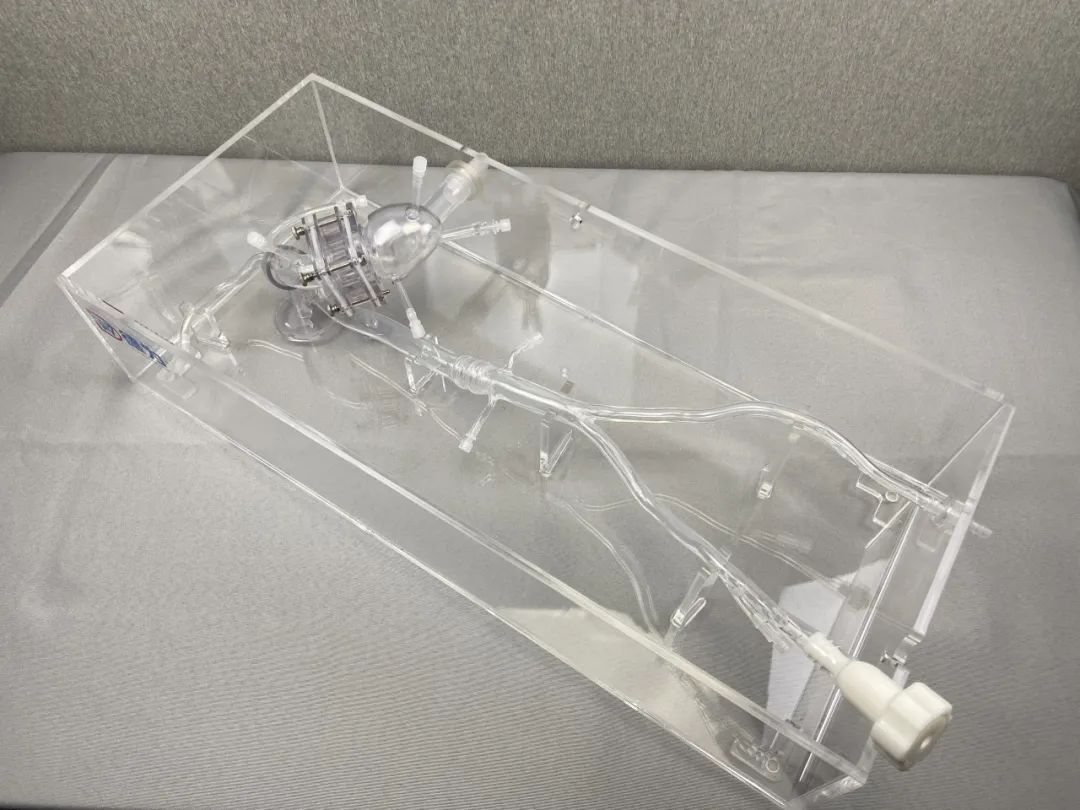
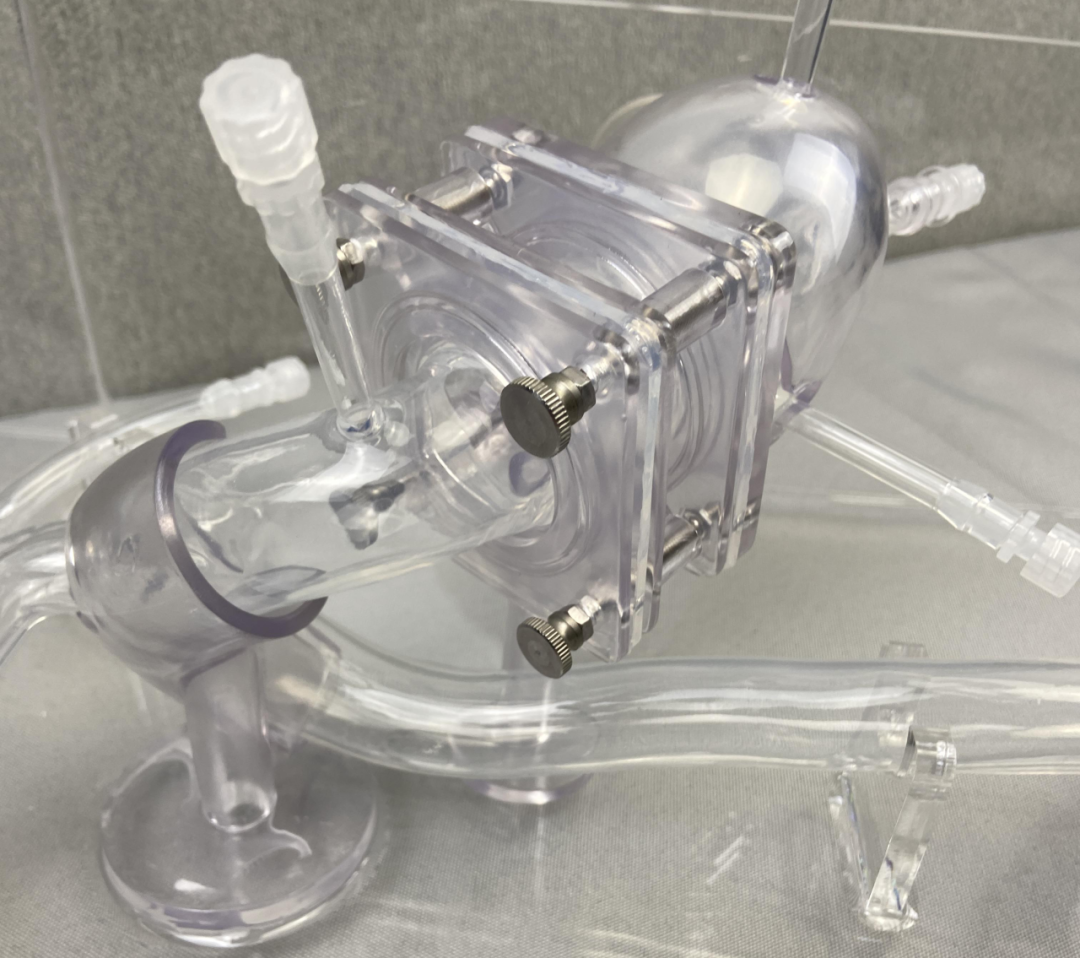
Physical image of the DeWei Medical TAVR model
02 Equipment Testing
The TAVR heart model also plays a crucial role in medical device development. It can be used to test and optimize new TAVR devices, accelerating the product development process. By simulating real surgical conditions, researchers can evaluate the release performance of the novel valve stent, its expansion level, anchoring stability, and its interaction with surrounding tissues. Additionally, the model can be integrated with computer-aided numerical simulation techniques to evaluate the implantation outcomes of stents with varying sizes and designs, tailored to the patient’s unique anatomical features. This allows clinicians to select the optimal valve model and deployment position, as well as assess potential risks of complications. For instance, 3D-printed models of the aortic root can accurately map pressure distribution across critical areas of the aortic root, helping to determine the stability of transcatheter valve anchoring and identify risks such as conduction blockages.
TAVR heart model in Surgical Procedure Simulation And Equipment Testing It holds significant application value in this area. Not only does it provide clinicians with a realistic surgical training environment, helping to enhance surgical skills and safety, but it also serves as an effective testing platform for medical device development, accelerating the research, design, and optimization of innovative instruments. As the technology continues to advance, TAVR heart models will play an even greater role in the field of minimally invasive cardiovascular surgery.
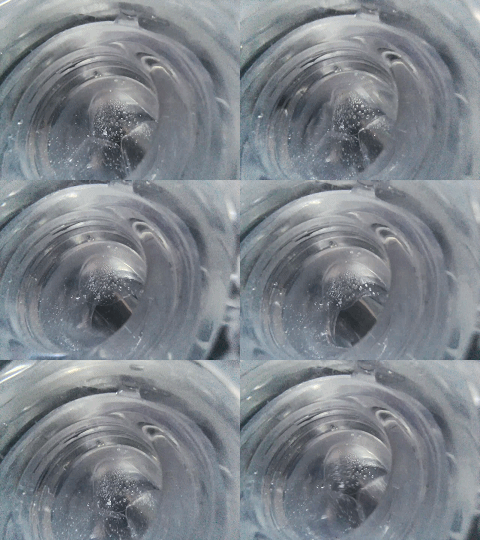
Simulated heart valve opening and closing
Product Configuration
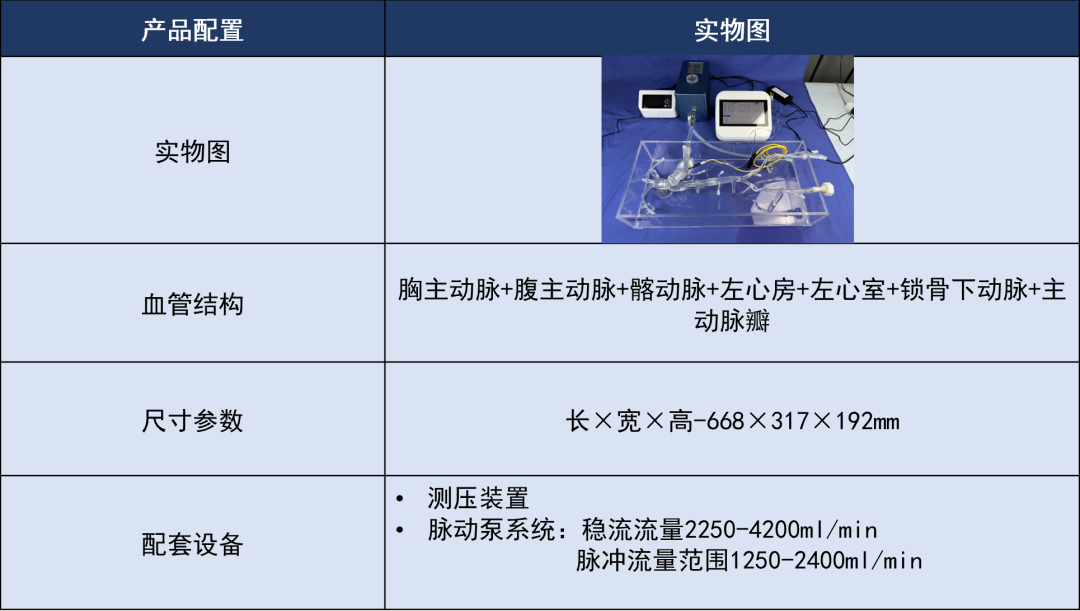
Pulsating Pump System It is one of the core ancillary devices for the TAVR heart model. Capable of simulating real-world cardiac hemodynamic conditions, it offers a range of adjustable parameters, including blood temperature, pressure, and flow rate. Equipped with a pulsatile pump system, it can replicate various physiological states of the heart, such as normal heart rate, tachycardia, and bradycardia, providing a lifelike operational environment for surgical training and device testing.
Pressure measurement device Used to detect and display real-time pressure change curves within blood vessels. During TAVR procedure training, physicians can use the pressure-measuring device to obtain live data on intravascular pressure, enabling them to assess how surgical maneuvers affect hemodynamics. This is crucial for optimizing surgical strategies and enhancing procedural safety.
Keywords:
Aortic Valve Stenosis,TAVR,Transcatheter Aortic Valve Implantation,Silicone Vascular Model,3D printing,Minimally Invasive Intervention,Neurovascular Intervention,Medical device testing,Medical simulation
Other news
Request a quote
*Please keep your phone accessible—we'll reach out to you within 24 hours.
PARTNERSHIP
Partnership

Contact us
Address: Wangzuo Qujiang, 3269 Yanxiang Road, Yanta District, Xi'an City
Pre-sales Consultation
Request a quote


