


[Product Collection] 03 Simulation Model – Endoscopic Intervention Upper Gastrointestinal Tract Model | Accurately Replicates Physiological Details, Perfectly Recreating Digestive Scenarios
Release date:
2025-08-22 12:46
Upper gastrointestinal diseases encompass a wide range of pathological conditions affecting the esophagus, stomach, and duodenum, including infectious lesions (such as esophageal candidiasis, CMV-induced esophagitis, and HSV-related esophagitis), inflammatory disorders (like gastric ulcers and duodenitis), neoplastic conditions (including esophageal cancer, gastric cancer, and submucosal tumors), as well as acute bleeding episodes (such as ruptured varices or ulcer-related hemorrhage). These conditions often present with diverse clinical symptoms, and some early signs may be subtle or even absent. Without timely intervention, they can progress into life-threatening emergencies or malignant tumors. For instance, acute upper gastrointestinal bleeding (UGIB) carries a mortality rate as high as 2%–15%, and the accuracy of predicting the need for endoscopic intervention directly impacts treatment efficiency. Meanwhile, submucosal tumors of the digestive tract (SMTs), due to their deep-seated location, are typically challenging to diagnose using conventional endoscopy alone, often requiring advanced techniques such as endoscopic ultrasound (EUS) for accurate identification.
One . Type of disease With Clinical Challenges
Upper gastrointestinal diseases encompass a variety of pathological conditions affecting the esophagus, stomach, and duodenum, including infectious lesions such as esophageal candidiasis, CMV Gastroesophageal esophagitis, HSV Esophagitis, inflammation (such as gastric ulcers and duodenitis), tumors (including esophageal cancer, stomach cancer, and submucosal tumors), as well as acute bleeding episodes (like ruptured varices or ulcer-related hemorrhage)—all of these conditions present with diverse clinical manifestations. Some early symptoms are subtle and easily overlooked, but without timely intervention, they can progress into life-threatening emergencies or even malignant tumors. For instance, acute upper gastrointestinal bleeding ( UGIB ) The mortality rate is as high as 2%-15% Moreover, the accuracy of predicting endoscopic intervention needs directly impacts treatment efficiency; meanwhile, submucosal tumors of the digestive tract ( SMT ) Due to its deep location, conventional endoscopy is often insufficient for diagnosis, requiring reliance on endoscopic ultrasound. EUS ) Advanced technologies.
Two . Structure and Function
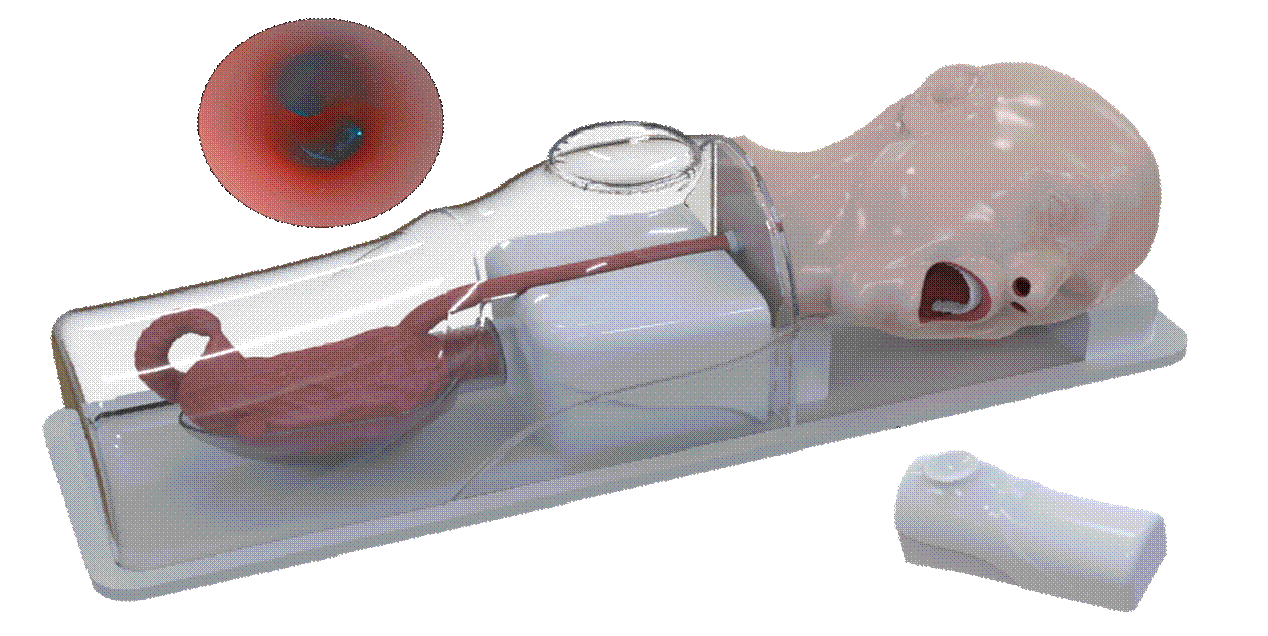
Structure:
Complete duodenum
Function:
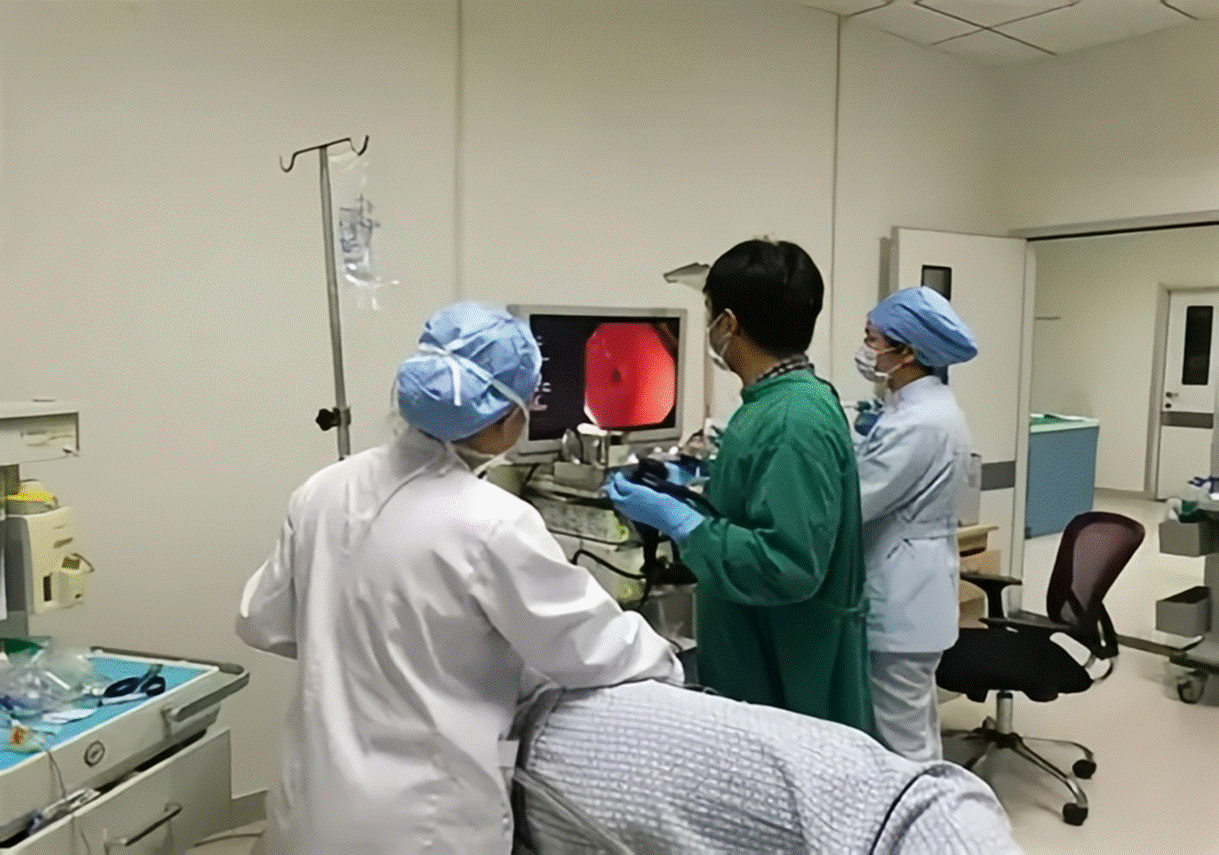
The endoscopic intervention model of the upper digestive tract is a specialized teaching or training tool designed to simulate endoscopic diagnostic and therapeutic procedures in the upper gastrointestinal tract (including the esophagus, stomach, duodenum, and more). Its core functionality revolves around Operation simulation, instructional training, and skills assessment Expand, specifically including the following aspects:
1. Full-Fidelity Operational Simulation : Accurately replicates anatomical structures such as physiological esophageal strictures and gastric mucosal folds; some advanced models can even simulate variations like esophageal diverticula or gastric volvulus, as well as post-surgical configurations. Medical-grade materials are used to mimic the softness of the mucosa and the resistance of the tube walls, providing realistic feedback during instrument manipulation—perfect for supporting interventional procedures such as biopsies and polyp removal.
2. Diverse Training Functions : Includes foundational training in endoscopic manipulation, lesion identification, and more—plus it can simulate therapeutic scenarios such as hemostasis, polypectomy, and stent placement, and even allows for custom design. “ Piercing ““ Uncontrolled bleeding ” Train emergency response capabilities using various complication scenarios.
3. Digital Transformation High-end models provide real-time feedback on endoscopic views via camera and assign scores, while the system records operational data to generate evaluation reports; combined with VR Technology creates immersive virtual training environments.
4. Clinical Support Value : Used for surgical rehearsals in complex cases, testing of new medical devices, and communication between doctors and patients.
Application scenarios This includes medical education, specialized training, equipment R&D and testing, as well as emergency drills, helping to enhance the standardization of endoscopic diagnosis and treatment.
Three . Application
The endoscopic intervention upper gastrointestinal model is widely used in medical education, clinical training, research, and patient-doctor communication. In medical education, it helps students master fundamental skills such as endoscope manipulation and lesion identification, allowing them to familiarize themselves with the endoscopic visual characteristics of the esophagus, stomach, and duodenum by simulating both normal and anatomically variant structures. During clinical training, the model can replicate real-life scenarios like hemostasis, polypectomy, and stent placement, while also mimicking potential complications such as perforation or uncontrolled bleeding, thereby enhancing healthcare professionals' ability to handle emergencies effectively. Digital models even offer real-time feedback on operational performance, providing detailed scoring and generating quantifiable reports that can be used for skill assessments and competitive evaluations. In research, these models serve as a versatile testing platform for new endoscopic devices, enabling validation of their compatibility and ease of use. For complex cases, they can simulate surgical pathways, helping clinicians refine treatment strategies. Additionally, by visually demonstrating procedures like stent placement to patients and their families, the model has become an invaluable tool for facilitating clear communication between doctors and patients, alleviating preoperative anxiety, and ultimately advancing the teaching, practice, and innovation of endoscopic intervention techniques in a comprehensive manner.
Keywords:
Other news
Request a quote
*Please keep your phone accessible—we'll reach out to you within 24 hours.
PARTNERSHIP
Partnership

Contact us
Address: Wangzuo Qujiang, 3269 Yanxiang Road, Yanta District, Xi'an City
Pre-sales Consultation
Request a quote


